Günlük Hayat · Metin 126
Living With a Flatmate
Ev arkadaşıyla yaşamak
Bulaşıklar, gürültü, faturalar... Yurt dışında ev arkadaşıyla yaşarken çıkan sorunlar ve onları İngilizce konuşarak çözmenin yolları.
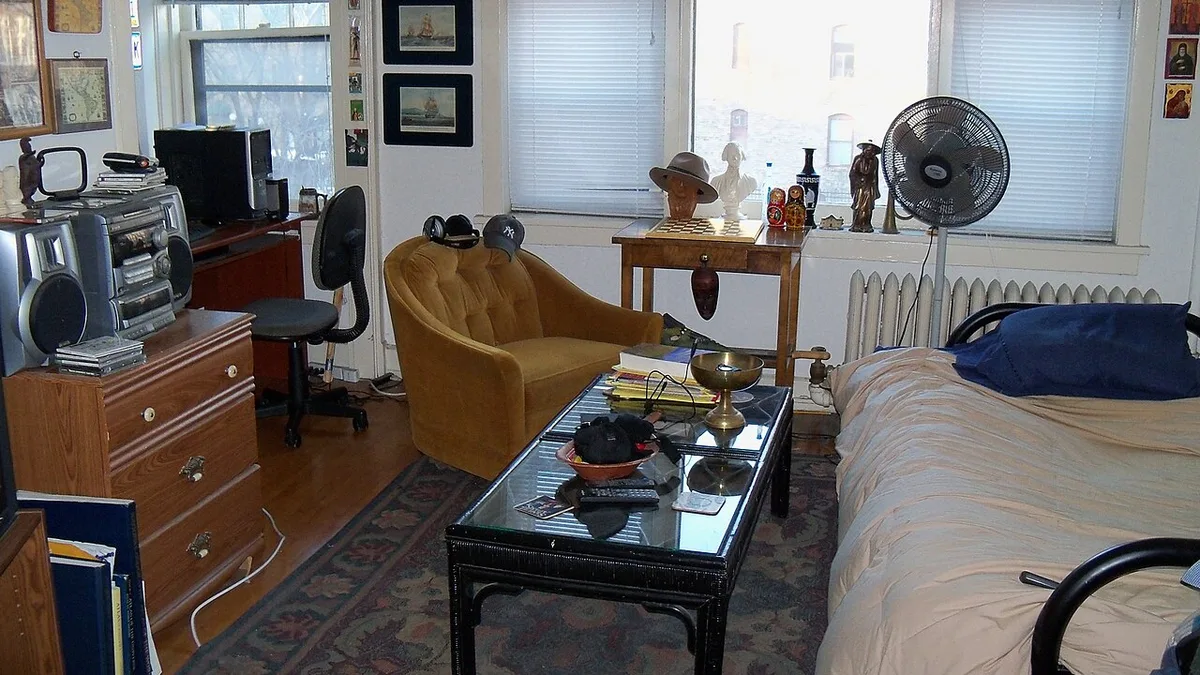
Küçük bir stüdyo daire (temsilî görsel) · Fotoğraf: Jon Platek · CC BY-SA 3.0
Level 1 · Başlangıç · A1–A2
Altı çizili kelimelere dokun!
Emre is a student in Dublin. He a small flat with Tom, a student from Ireland. They are , but there are some problems.
Emre Dublin'de öğrenci. Küçük bir daireyi İrlandalı öğrenci Tom'la paylaşıyor. Arkadaş canlısılar ama bazı sorunlar var.
Tom never washes the . And he plays loud music late at night. Emre can't .
Tom bulaşıkları hiç yıkamıyor. Ve gece geç saatte yüksek sesle müzik çalıyor. Emre uyuyamıyor.
One evening, Emre says, "Tom, can we talk? I have a with the dishes and the music." Tom says, "Oh, sorry! I didn't ."
Bir akşam Emre, "Tom, konuşabilir miyiz? Bulaşıklar ve müzikle ilgili bir sorunum var," diyor. Tom, "Ah, kusura bakma! Bilmiyordum," diyor.
They make some : Emre washes the dishes on Monday, Wednesday and Friday, and Tom does it on the other days. No loud music after eleven. Now they are .
Birkaç kural koyuyorlar: Bulaşıkları pazartesi, çarşamba ve cuma Emre yıkıyor, diğer günler Tom. Saat on birden sonra yüksek sesle müzik yok. Artık mutlular.
Gramer ipucu
Can we talk?
Can we …?: Birlikte bir şey yapmayı kibarca önerirken ya da isterken kullanılır.
Metinden:
Tom, can we talk?
Başka örnekler:
- Can we meet tomorrow?Yarın buluşabilir miyiz?
- Can we start now?Şimdi başlayabilir miyiz?
Bu metnin kelimeleri
- share fiil paylaşmak We share a room.
- friendly sıfat arkadaş canlısı The people here are very friendly.
- dishes isim bulaşık I'll wash the dishes.
- sleep fiil uyumak I can't sleep.
- problem isim sorun There's a problem with my phone.
- know fiil bilmek I don't know his name.
- rule isim kural Follow the rules.
- happy sıfat mutlu She looks happy.
Anladın mı? Mini quiz
-
Where is Tom from?
İrlanda'dan.
-
What are the two problems?
Bulaşıklar ve yüksek müzik.
-
How does Tom react?
Özür diliyor.
-
What is one of their new rules?
On birden sonra yüksek müzik yok.
Level 2 · Orta · B1
Altı çizili kelimelere dokun!
When Emre moved to Dublin for his master's degree, he found a room in a flat with an Irish student called Tom. At first everything was great. Tom was funny and , and he showed Emre the best places in the city.
Emre yüksek lisans için Dublin'e taşındığında Tom adında İrlandalı bir öğrenciyle bir dairede oda buldu. İlk başta her şey harikaydı. Tom komik ve cömertti, Emre'ye şehrin en güzel yerlerini gösterdi.
After a few weeks, though, small problems started to . Dirty dishes stayed in the sink for days, Tom's friends often came over late at night, and nobody was sure who should pay the internet . Emre didn't say anything because he wanted to an argument, but he was getting more and more .
Ama birkaç hafta sonra küçük sorunlar birikmeye başladı. Kirli bulaşıklar günlerce lavaboda kaldı, Tom'un arkadaşları sık sık gece geç saatte geldi ve internet faturasını kimin ödemesi gerektiğinden kimse emin değildi. Emre bir tartışmadan kaçınmak istediği için hiçbir şey söylemedi ama giderek daha fazla sinirleniyordu.
Finally, he decided to talk to Tom calmly. He used "I" sentences instead of blaming: "I find it hard to sleep when there are guests late at night," rather than "You're always so noisy!" Tom listened and admitted he hadn't .
Sonunda Tom'la sakince konuşmaya karar verdi. Suçlamak yerine "ben" cümleleri kullandı: "Hep çok gürültücüsün!" yerine "Gece geç saatte misafir olduğunda uyumakta zorlanıyorum." Tom dinledi ve fark etmediğini kabul etti.
Together they made a simple : a cleaning on the fridge, quiet hours after 11 p.m. on weekdays, and an app to split the bills. Months later, they're still good friends. "The problem wasn't Tom," Emre says. "It was that we never talked about it."
Birlikte basit bir anlaşma yaptılar: buzdolabında bir temizlik çizelgesi, hafta içi saat 23'ten sonra sessizlik saatleri ve faturaları bölüşmek için bir uygulama. Aylar sonra hâlâ iyi arkadaşlar. "Sorun Tom değildi," diyor Emre. "Sorun bunu hiç konuşmamış olmamızdı."
Gramer ipucu
get + more and more + sıfat
get more and more + sıfat: “giderek daha … olmak”. Artan bir değişimi anlatır.
Metinden:
he was getting more and more annoyed
Başka örnekler:
- It's getting more and more expensive.Giderek pahalılaşıyor.
- She got more and more nervous.Giderek daha gergin oldu.
Bu metnin kelimeleri
- generous sıfat cömert Thank you, that's very generous.
- pile up fiil birikmek, yığılmak My work is piling up.
- bill isim fatura; hesap Did you pay the electricity bill?
- avoid fiil kaçınmak Avoid sugary drinks.
- annoyed sıfat sinirli, rahatsız I was annoyed by the noise.
- notice fiil fark etmek Did you notice his new haircut?
- agreement isim anlaşma We reached an agreement.
- schedule isim çizelge, program What's your schedule for today?
Anladın mı? Mini quiz
-
Why did Emre move to Dublin?
Yüksek lisans için.
-
Why didn't Emre say anything at first?
Tartışmadan kaçınmak istedi.
-
What kind of sentences did Emre use?
"Ben" cümleleri.
-
What does Emre say the real problem was?
Hiç konuşmamışlardı.
Level 3 · İleri · B2
Altı çizili kelimelere dokun!
Shared accommodation is a of passage for many international students, and it often begins with genuine warmth. That was certainly Emre's experience when he moved into a Dublin flat with Tom, an Irish student whose humour and generosity made the first weeks of his master's programme far less .
Ortak konaklama pek çok uluslararası öğrenci için bir geçiş ritüelidir ve çoğu zaman içten bir sıcaklıkla başlar. Emre'nin Dublin'de İrlandalı öğrenci Tom'la bir daireye taşındığında yaşadığı da kesinlikle buydu; Tom'un mizahı ve cömertliği yüksek lisans programının ilk haftalarını çok daha az göz korkutucu hâle getirdi.
As is often the case, however, friction emerged not from any single dispute but from an accumulation of minor : dishes left for days, late-night visitors and an over who was responsible for the internet bill. Wary of confrontation, Emre kept quiet, a strategy that allowed his to grow while Tom remained entirely unaware of it.
Ancak çoğu zaman olduğu gibi sürtüşme tek bir anlaşmazlıktan değil, küçük şikâyetlerin birikmesinden doğdu: günlerce bekletilen bulaşıklar, gece geç saatteki ziyaretçiler ve internet faturasından kimin sorumlu olduğuna dair bir belirsizlik. Yüzleşmekten çekinen Emre sessiz kaldı; bu strateji, Tom durumdan tamamen habersizken Emre'nin kırgınlığının büyümesine yol açtı.
When he finally raised the issue, he relied on a technique often recommended by : framing concerns in terms of their effect on himself rather than as criticism of the other person. "I struggle to sleep when there are guests after midnight" invites problem-solving, whereas "You're so inconsiderate" invites . Tom responded as many people do when approached this way, with surprise and a willingness to adjust.
Sonunda konuyu açtığında, arabulucuların sıkça önerdiği bir tekniğe başvurdu: endişeleri karşıdaki kişiye yönelik bir eleştiri olarak değil, kendisi üzerindeki etkileri açısından ifade etmek. "Gece yarısından sonra misafir olduğunda uyumakta zorlanıyorum" sözü çözüm aramaya davet ederken "Çok düşüncesizsin" savunmaya geçmeye davet eder. Tom, bu şekilde yaklaşılan pek çok kişinin yaptığı gibi şaşkınlık ve uyum sağlama isteğiyle karşılık verdi.
The they reached was deliberately practical: a visible cleaning rota, agreed quiet hours on weekdays and an app to split shared costs transparently. Months later, the friendship has survived intact. Emre's reflection is perhaps the most transferable lesson: in shared living, problems left unspoken tend to do far more damage than problems openly discussed.
Vardıkları düzenleme bilerek pratik tutuldu: görünür bir temizlik nöbet çizelgesi, hafta içi üzerinde anlaşılmış sessizlik saatleri ve ortak masrafları şeffaf biçimde bölüşmek için bir uygulama. Aylar sonra arkadaşlık bozulmadan sürüyor. Emre'nin vardığı sonuç belki de en çok başka durumlara aktarılabilecek ders: Ortak yaşamda dile getirilmeyen sorunlar, açıkça konuşulan sorunlardan çok daha fazla zarar verme eğilimindedir.
Gramer ipucu
As is often the case
As is often the case: “Çoğu zaman olduğu gibi”. Durumun alışılmış olduğunu belirtir.
Metinden:
As is often the case, however
Başka örnekler:
- As is often the case, the train was late.Çoğu zaman olduğu gibi tren gecikti.
- As is often the case with children, he got bored quickly.Çocuklarda sık görüldüğü gibi çabucak sıkıldı.
Bu metnin kelimeleri
- rite (of passage) isim (geçiş) ritüeli Getting a driving licence is a rite of passage.
- daunting sıfat göz korkutucu Starting a new job can be daunting.
- grievance isim şikâyet, dert Workers listed their grievances.
- ambiguity isim belirsizlik, muğlaklık There is some ambiguity in the contract.
- resentment isim kırgınlık, içerleme She felt resentment towards her boss.
- mediator isim arabulucu A mediator helped them agree.
- defensiveness isim savunmaya geçme Criticism often causes defensiveness.
- arrangement isim düzenleme, anlaşma We made an arrangement to share the car.
Anladın mı? Mini quiz
-
Where did the friction come from?
Küçük şikâyetlerin birikmesinden.
-
What was the result of Emre keeping quiet?
Kırgınlığı büyüdü, Tom habersizdi.
-
What does "You're so inconsiderate" invite, according to the text?
Savunmaya geçme.
-
What is Emre's main lesson?
Konuşulmayan sorunlar daha çok zarar verir.